“Sweetness” by Toni Morrison
“Sweetness” by Toni Morrison was quite an interesting story to read. To see colorism be integrated so heavily on individuals that it even is seen within families. Not just family but a newborn baby with their parents. Lula Ann was rejected by the outside world before she even knew it. The story begins with Sweetness telling us “It’s not my fault. So you can’t blame me.” Which is such a deeper statement then it seems. In a way the fault goes go to many. The fault goes to society, to media, to slavery, to history, to the white people and to the black. It goes to Sweetness’s family for being the way they were, trying to pass for white and not living and embracing in their truth as well as raising Sweetness to have that mentality. However, above all, I will still blame Sweetness 100%. No matter the circumstances, a mother loves their child unconditionally. Lula Ann was just a baby and Sweetness was so embarrassed by her and had so much resentment towards her, that she tried to smother her with a blanket! I will blame her.
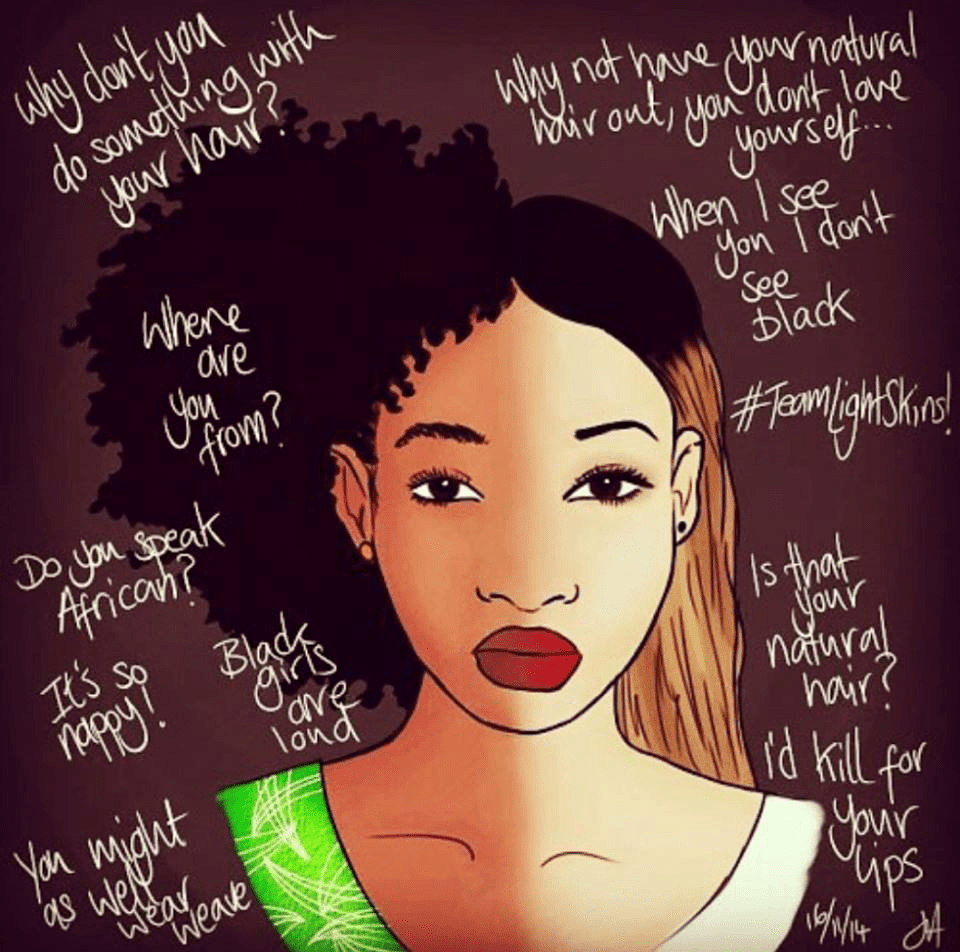
Sweetness knows in the bottom of her heart she should be blamed. Sweetness told Lula Ann to call her “Sweetness” instead of “Mother” or “Mama.” because, as she stated, ” It was safer. Her being that black and having what I think are too thick lips and calling me ‘Mama’ would’ve confused people.” Besides her excuses, she doesn’t explain why she chose to be called “Sweetness.” Which is defined as: 1. The quality of being sweet. 2. Quality of being pleasant or likable. That says a lot as to why Sweetness chose that word to be called. Though she was not a good mother to her child, she wanted Lula Ann to always remember her as “Sweetness,” masquerading her true colors. In the end of the story however we see a tinge of regret that Sweetness feels from how she treated Lula Ann, but still believes it is not her fault, stating, “I wasn’t a bad mother, you have to know that, but I may have done some hurtful things to my only child because I had to protect her. Had to. All because of skin privileges.” There is a big difference between treating your child wrong because of your own racist/colorist views and teaching your child double consciousness. Another reason I will blame her. The story ends with Sweetness talking about parenting and how Lula Ann sent a note saying that she is expecting a baby. While throughout the novel I feel as though Sweetness was trying to convince the readers and more so to herself that she was not a bad mother and that it’s not her fault for what happened, which I believe is her own guilty conscience trying to not take any responsibility for her actions. There are lots of issues to blame for colorism that has been going on for decades. Nonetheless, Sweetness does deserve blame, and she was not a genuinely good mother. Ultimately though, it resulted in Lula Ann finding confidence and strength within herself as Sweetness stated, “Last two times I saw her she was, well, striking. Kind of bold and confident. Each time she came to see me, I forgot just how black she really was because she was using it to her advantage in beautiful white clothes.” Sweetness also shared how she’s a rich career girl. Thankfully, Lula Ann grew strong from her mother’s mistreatment and made something of herself. In essence, the short story brought the issues of colorism in the African American community as well as in society to light which is one of my personal favorite topics and Toni Morrison did a beautiful job of discussing the issue through his story.
 Erica Ulloa's Blog